From 1 October 2026, the EU will introduce new requirements that make it more difficult to conceal where steel was actually produced. For construction contractors, precast concrete manufacturers, and other steel buyers, this means that documentation, origin, and traceability will become even more important in every project.
From Country of Rolling to True Origin
Melt and Pour refers to declaring the country where the steel was first melted and cast into its first solid form. This could, for example, be a billet, slab, or other semi-finished product that is subsequently rolled into the finished product.
This represents a significant change from current practice. In many cases, the documentation primarily shows where the steel was rolled. Going forward, it will be necessary to demonstrate both where the steel was rolled and where it was originally produced.
A Simple Example
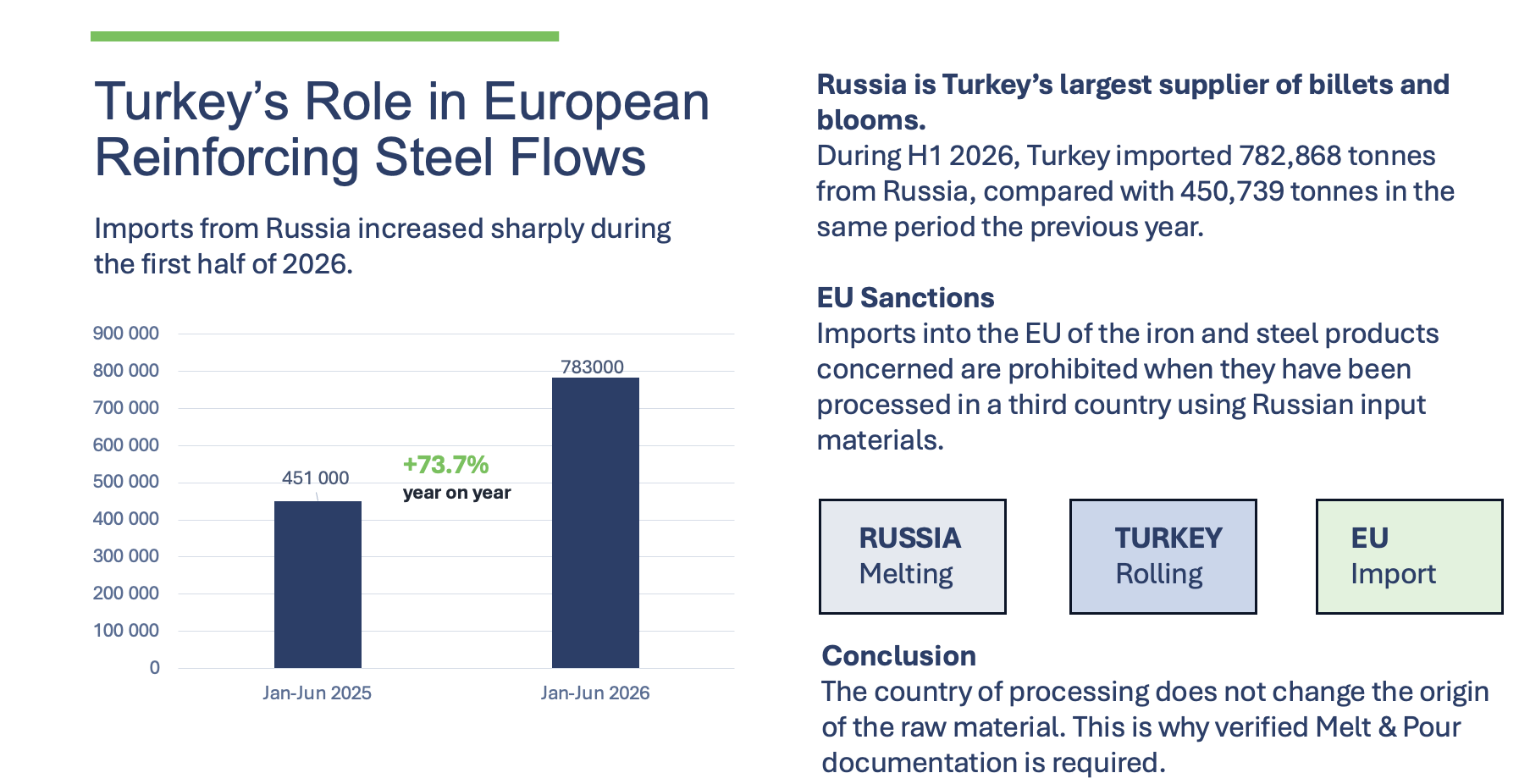
Imagine that a mill in Turkey purchases semi-finished steel billets from Russia and rolls them into reinforcing steel. In some contexts, the material may then be perceived as Turkish because the final processing takes place there.
With Melt and Pour, the picture becomes clearer: the steel’s origin is Russia, because that is where the steel was first melted and cast. This is precisely the type of concealed origin that the EU now wants to make visible.
“This Is About Control, Not Just Administration”
For Utku Õner, CEO of 7 Steel Nordic, the change is also important from a customer perspective.
“This is not just about new administrative requirements. It is about ensuring that the construction industry knows what material is actually being incorporated into a project,” says Utku Õner.
He believes the issue becomes particularly important when material passes through several countries before reaching the construction site.
“The country of rolling does not always tell the whole story. If the crude steel originates somewhere else, the customer needs to be able to see that. Otherwise, there is a risk of material entering projects that would never have been accepted if its origin had been clear from the outset.”
Documentation Will Be Crucial
The EU’s new rules mean that importers must be able to provide a Mill Test Certificate (MTC) stating the country of Melt and Pour and the heat/charge number. The MTC will therefore become the key document for verifying the origin of the steel.
During a transitional period, from 1 October 2026 to 30 September 2027, other documentation may also be used, provided that it contains the required information. However, if the supporting documentation is missing or cannot be verified, the import may be delayed or stopped.
What Should Customers and Buyers Consider?
Anyone purchasing reinforcing steel or other steel products should not be satisfied with information about the rolling mill or country of export alone. The question should be raised at the procurement and tender stage: Can the supplier demonstrate where the steel was melted and cast?
Example of a simple requirement specification:
- For deliveries of steel and reinforcing steel, the supplier shall declare and provide evidence of the country of Melt and Pour.
- The Mill Test Certificate (MTC) shall state the Melt and Pour country and the heat/charge number. This information shall be traceable to the markings on the delivered material.
- Information regarding the rolling mill, country of export, or country of latest processing shall not be accepted as the sole evidence of origin.
Traceability Becomes a Competitive Issue
Melt and Pour does not change the technical properties of the steel. What it does change is the ability to verify origin, risk, and sustainability throughout the supply chain. For companies that already have clear requirements for documentation, EN 10204 3.1 certification, and traceability, the transition will be less dramatic. For others, the impact may be more significant.
“Our view is that this will benefit suppliers who already have their documentation in order. It will become easier for customers to select the right material, avoid unwanted origins, and at the same time strengthen their sustainability efforts,” says Utku Õner.