
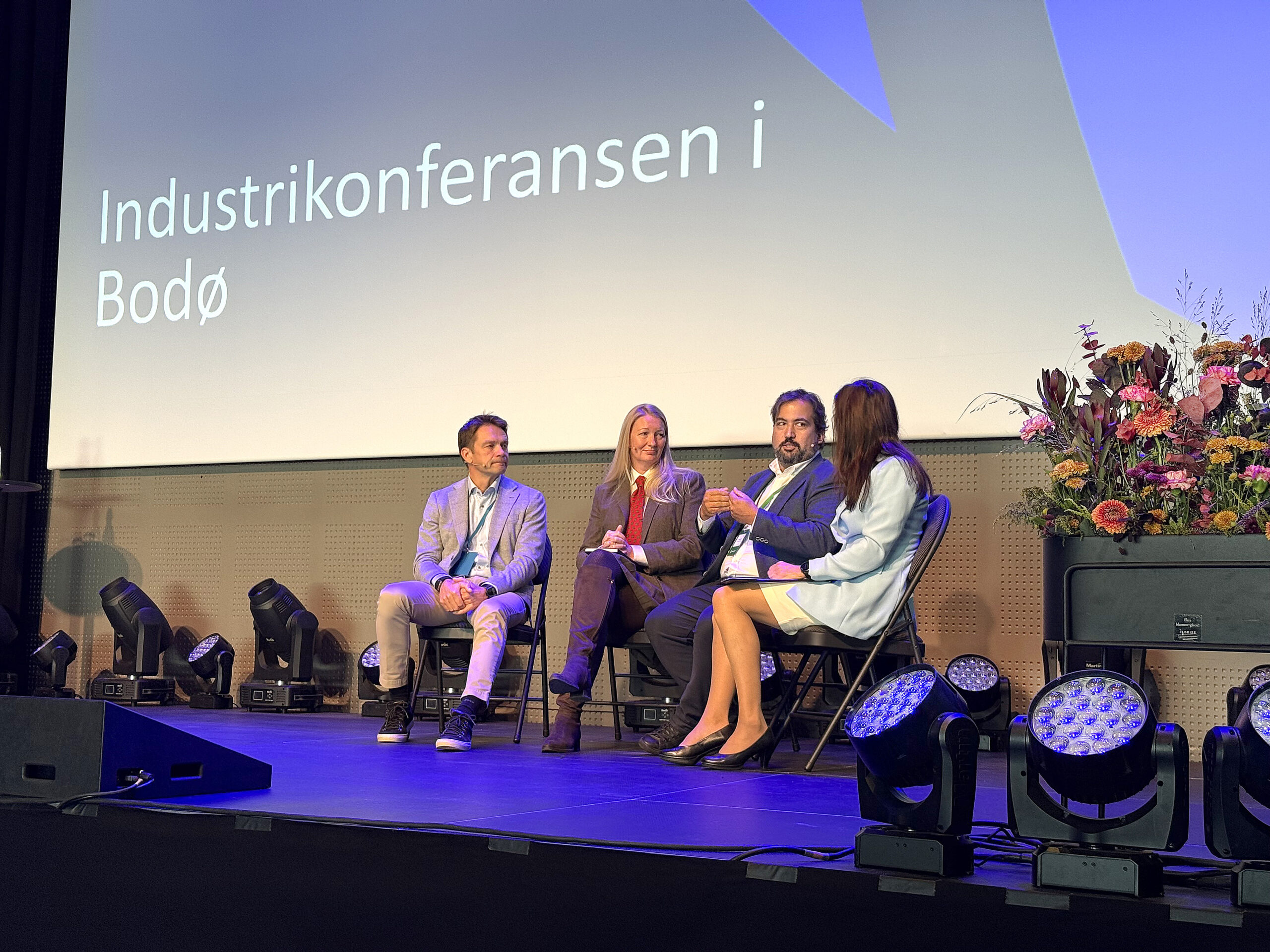
Norway risks becoming an entry point for high emission steel facing increasing barriers in the European market, 7 Steel Nordic CEO Utku Öner warned at the Industry Conference in Bodø. At the same time, he highlighted the EU’s proposed Industrial Accelerator Act as an important opportunity for companies that have invested in decarbonisation.
Speaking at the conference, Öner addressed two European policy developments with major implications for the steel industry: the Carbon Border Adjustment Mechanism (CBAM) and the proposed Industrial Accelerator Act.
7 Steel supports the fundamental objective of CBAM. Creating fairer competition between European producers investing in decarbonisation and imported products with higher emissions.
– We support CBAM because the aim is to create a fair trading field, Öner said.
Over the past decade, 7 Steel has invested significantly in decarbonisation, reducing its carbon footprint by around 40 per cent. These reductions require substantial investments, making fair and transparent market conditions increasingly important.
Norway exposed to changing trade flows
Öner pointed to uncertainty surrounding the implementation of CBAM, as well as differences in timing between Norway and the EU.
At the same time, the EU and UK are strengthening measures affecting steel imports. According to Öner, this could redirect material that faces greater barriers in these markets towards Norway.
– The only region around that is remaining unprotected right now is Norway, he said.
Öner stressed that the issue is not only the carbon footprint of imported steel, but also its true origin. As the EU introduces stricter documentation and traceability requirements, he believes Norway should follow these developments closely.
7 Steel has already seen signs of changing trade flows.
– This summer, we have seen a massive amount of offers coming to our customers in Norway with Turkish material, Öner said.
His message was not that Norway should automatically introduce the same trade measures as the EU, but that Norwegian authorities should strengthen documentation and customs requirements to ensure transparency about the origin of imported materials.
Industrial Accelerator Act could reward low-carbon production
Öner was particularly positive about the EU’s proposed Industrial Accelerator Act, which could strengthen demand for low-carbon materials through public procurement and establish clearer standards for what qualifies as a green product.
– The Industrial Accelerator Act will have a massive impact. It’s the first time we’ve seen such intense and focused, dedicated action in Brussels around this, he said.
For 7 Steel, common and verifiable standards could be significant. The company currently produces steel with a carbon footprint of around 180 kilograms of CO₂ per tonne, which Öner described as likely among the lowest levels in Europe.
However, low-carbon production only provides a competitive advantage if customers can reliably compare products based on consistent documentation.
– Today it is very difficult to compete on an unfair level because there are materials coming in pretending they are also green with no documentation behind, Öner said.
Clear European standards could therefore help distinguish genuinely low-carbon products and reward companies that have invested in reducing emissions.
For 7 Steel, the direction is clear. The transition to lower-carbon steel requires investment, but it also requires market conditions that recognise the value of those investments.
As Öner emphasised in Bodø, transparent standards, reliable documentation and fair competition will be essential if Europe, and Norway, are to accelerate the green industrial transition.